Venues
Galerie Eva Presenhuber

Courtesy the artist and Galerie Eva Presenhuber, Zurich / Vienna © the artist. Photo: Stefan Altenburger.
Galerie Eva Presenhuber is pleased to present The Slope (Works 2005–2026), its tenth exhibition by Swiss artist Valentin Carron. Curated by Samuel Gross, this exhibition is conceived as a retrospective of the artist’s twenty-year collaboration with the gallery.
For over two decades, Valentin Carron has pointed out the persistent and disenchanted fragments of our modern dream with a sigh of disillusionment. In this retrospective, once again, he deploys the diversity of his work with irony and without artifice. Two curves are cut out along two lines. From largest to smallest and vice versa, a selection of wall works and sculptures are presented according to their format. The hanging becomes abstract, and the works, a succession of motifs. The effect is cold and intense.
While Carron’s work has always been about confronting us with our contradictions in our relationship to the modern dream, here the artist does not hesitate to turn irony against himself. He becomes the one who classifies, ranks, and executes. He is unambiguously the one who reminds us of our own illusions of creativity and change. For the duration of an exhibition, he looks back, imagining that everything he has been able to put in place remains living matter. Thus, visitors will find themselves perceiving the rebounds and returns amplified by the anti-chronological order.
The artist is therefore still the same. He is totally committed to his slightly disappointed perception of the world. His sensitivity allows him to transform this disappointment into a mirror that reflects back on us. He is not afraid of the monumental or the fragile. His gaze seems capable of penetrating everywhere. It is right there, behind our weaknesses and the conventions of our petty mediocrities. But he knows that he shares this fate with us, that nothing sets him apart from us. It is almost the opposite, as Carron seems to take it upon himself to revitalize what we would prefer to forget.
As the title suggests, being modern on the slope may also mean accepting the decline and the effort required to stay on your feet. For Carron, being an artist may also mean anchoring oneself in reality to the point of seeing its flaws and cracks. He is on the slope like the rest of us.
The large eagle in resin (1967 (after Fornage, 2004) is an exact copy of a sculpture abandoned in the parking lot of a former suburban furniture store. The monumental clock (Orologio IV, 2008), which appears to be made of concrete, is reminiscent of those that have been forgotten since the advent of cell phones displaying the time. The paint solidifies in blind stained glass windows (Die unglaubwürdige Wissenschaft der anmutig Zusammenhängenden Lobeshymnen, 2013). It liquefies in the design of enlarged book covers stretched over tubular frames (La grande rechute, 2013) or accepts its popular and pop destiny (L’inquiéte silhouette, 2017). In sculpture, the human figure becomes omnipresent and almost a stereotype with tenfold power (L’amitié, 2026).
This exhibition is indeed a window onto our ability to survive the slipping away of our dreams. In fact, in the last room of the exhibition, visitors can imagine themselves in Carron’s archives and studio. It was he who gathered the documents and works that make up the exhibition. Visitors can glimpse the special energy that has allowed him to remain on the edge of the world for so long. He is that extraordinary friend who makes no concessions to good taste and propriety, but forces us to trust him in the radical nature of his perception.
This exhibition is also a portrait of the rebellious but fantastically sensitive teenager that Carron likes to show us. And for that reason alone, we would so much like to believe that twenty is nothing.
Samuel Gross
Valentin Carron was born in 1977 in Martigny, Switzerland, where he lives and works. Carron has been the subject of solo exhibitions at institutions including Le Portique – centre régional d’art contemporain du Havre, Le Havre, FR (2025); Le Manoir de la Ville de Martigny, Martigny, CH (2024); Chapelle des Élus, Dijon, FR (2023); Museum im Bellpark, Kriens, CH (2021); Le Consortium, Dijon, FR (2020); Centre d’edition contemporaine, Geneva, CH (2016); Kunsthalle Bern, Bern, CH (2014); Palais de Tokyo, Paris, FR (2010); La Conservera Centro de Arte Contemporáneo, Ceuti/Murcia, ES (2009); and Kunsthalle Zürich, Zurich, CH (2007), among others. In 2013, Carron represented Switzerland at the 55th Venice Biennale. Recently, he has participated in institutional group exhibitions at Langen Foundation, Neuss, DE (2025); Baur au Lac, Zurich, CH (2025); Swiss Embassy in France, Paris, FR (2024); Biennale Sion, Sion, CH (2023); Fondation Vincent Van Gogh, Arles, FR (2023); Aargauer Kunsthaus, Aarau, CH (2021); Centre Pompidou-Metz, Metz, FR (2020); Haus Konstruktiv, Zurich, CH (2019); Centre d’Edition Contemporaine, Geneva, CH (2019); Swiss Institute, New York, US (2018; 2017; 2015); Maison van Doesburg, Meudon, FR (2017); Istituto Svizzero di Rome, Rome, IT (2016); and High Line, New York, US (2016), among others.
Visit by Appointment
8005 Zurich
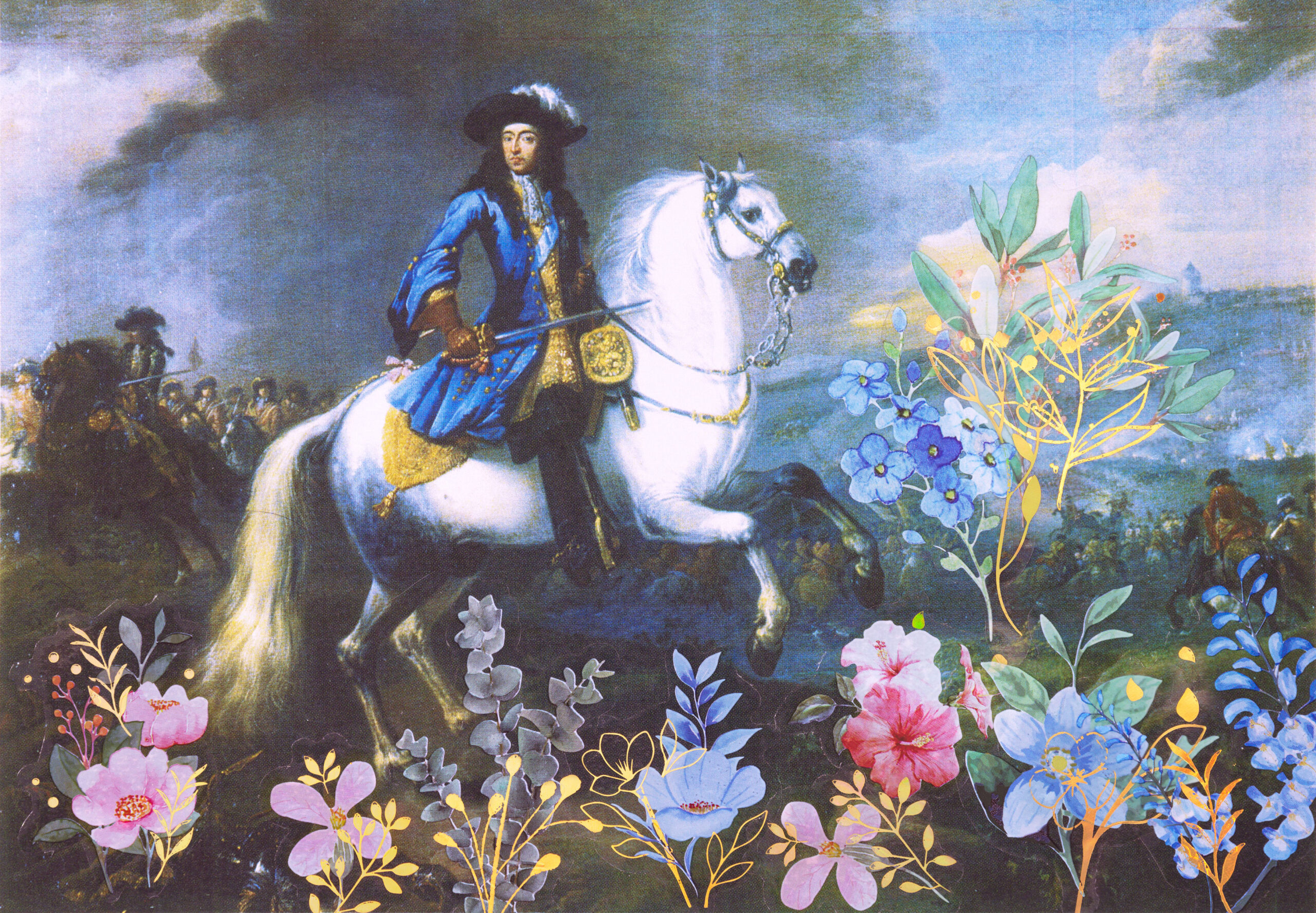
Courtesy the artist, Galerie Eva Presenhuber, and Sprüth Magers © Karen Kilimnik
Galerie Eva Presenhuber is pleased to present its ninth solo exhibition with the US-American artist Karen Kilimnik.
Since the late 1970s, Karen Kilimnik has consistently incorporated a wide variety of media into her work—from drawing and painting to collage, sculpture, and installation to photography and video. Despite this openness to different media, her work follows a conceptual precision. Kilimnik operates with an iconographic archive that spans several centuries: from 17th- and 18th-century court painting to romantic landscapes and history painting to references to popular culture, fashion, television, and movies. However, these diverse image sources do not appear as linear art-historical quotations. Rather, they appear in Kilimnik’s works as cultural recurring forms—as pictorial formulas that have sedimented over the course of history and are becoming visible again in the present. Her images therefore often appear as multi-layered pictorial spaces: layers of art history, decor, popular culture, and fantasy overlap to form a peculiar pictorial world that seems both familiar and unsettling.
One possible approach to Karen Kilimnik’s work is to examine the concept of glamour, which is repeatedly used as a descriptive category in the reception of her work. In her work, glamour does not appear as mere glitz or luxurious surface but unfolds its meaning in the depth of its etymological origin. The word “glamour” dates to the Scottish glamer of the early 18th century and originally referred to a spell that deceives the eye and makes the world appear more beautiful than it is. This meaning, in turn, is derived from “grammar,” a term associated in the Middle Ages with scholarly, sometimes occult knowledge. In this sense, glamour refers less to beauty than to a form of knowledge and power over appearance—an artificially created, dazzling visibility.
Dr. Raphael Gygax
Karen Kilimnik is an American artist working across painting, drawing, photography, and installation. Her work has been presented in numerous international exhibitions, including NSU Art Museum, Fort Lauderdale (2023), Museum of Contemporary Art, Denver (2013), Museum of Contemporary Art, Chicago (2008), Aspen Art Museum (2007), Serpentine Gallery, London (2007), Musée d’Art moderne de la Ville de Paris (2006). Works by Kilimnik are held in major public collections such as the Museum of Modern Art, New York; the Metropolitan Museum of Art, New York; the Whitney Museum of American Art, New York; and the Solomon R. Guggenheim Museum, New York. In fall 2026, Karen Kilimnik will be the subject of major solo exhibitions at Centro Pecci in Prato, Italy, and at the Kunstverein in Hamburg.
Visit by Appointment
8005 Zurich